Jul 8, 2025
Jul 8, 2025
Jul 8, 2025
THE NEW CURRENCY OF AESTHETICS: WHY MICRO-TRENDS MATTER MORE THAN EVER
Micro-trends are no longer just fleeting curiosities on TikTok — they’ve become the economic and aesthetic currency of the internet. One week it’s ballet flats, the next it’s blokecore, then suddenly your feed is swallowed by a thousand shades of “Barbie pink.” These cycles don’t emerge from nowhere; they’re the product of algorithmic acceleration, a feedback loop where culture is chewed up and spat back out at hyper-speed.
Micro-trends are no longer just fleeting curiosities on TikTok — they’ve become the economic and aesthetic currency of the internet. One week it’s ballet flats, the next it’s blokecore, then suddenly your feed is swallowed by a thousand shades of “Barbie pink.” These cycles don’t emerge from nowhere; they’re the product of algorithmic acceleration, a feedback loop where culture is chewed up and spat back out at hyper-speed.
Micro-trends are no longer just fleeting curiosities on TikTok — they’ve become the economic and aesthetic currency of the internet. One week it’s ballet flats, the next it’s blokecore, then suddenly your feed is swallowed by a thousand shades of “Barbie pink.” These cycles don’t emerge from nowhere; they’re the product of algorithmic acceleration, a feedback loop where culture is chewed up and spat back out at hyper-speed.
Author
NOISE
NOISE
READ
6 MINS
6 MINS
Category
CULTURAL CURRENTS
CULTURAL CURRENTS
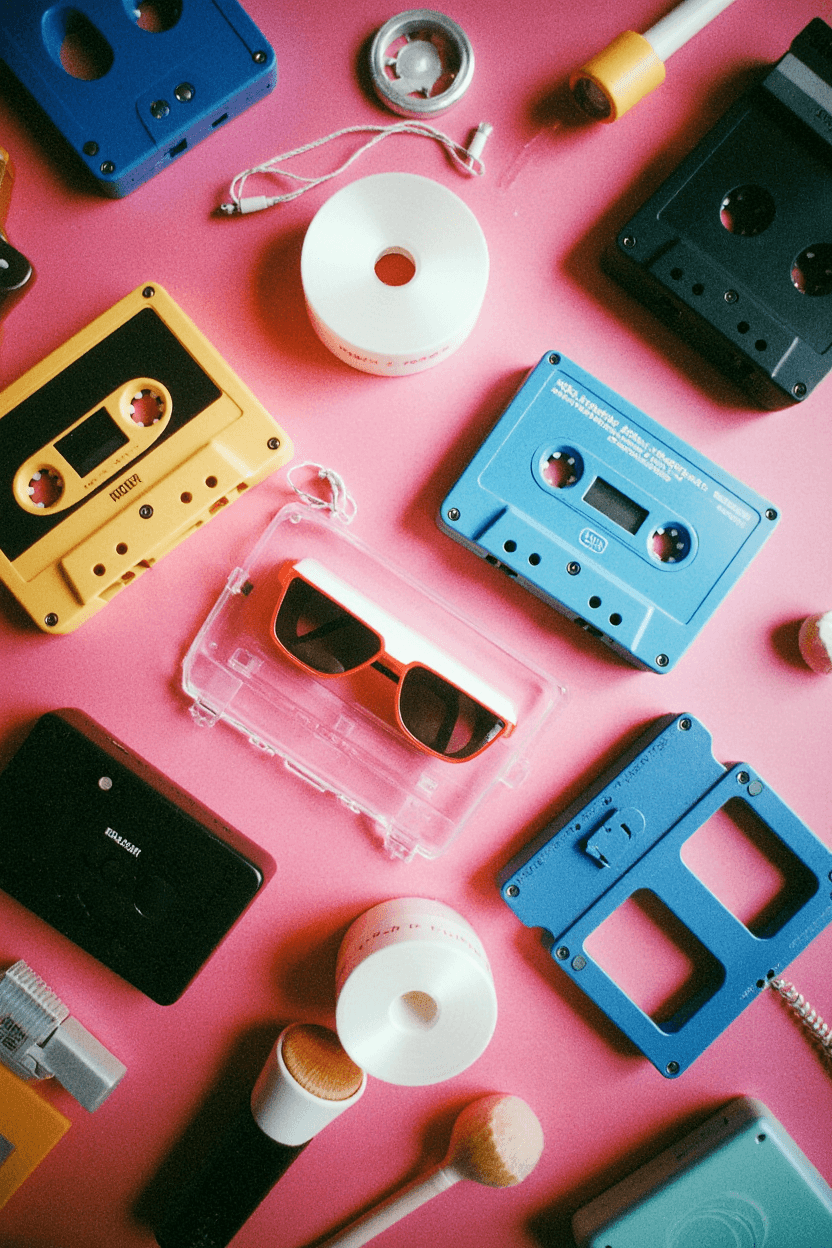
THE ATTENTION ECONOMY HAS A SHELFLIFE
In the past, a trend might have had a season. Now, it has a half-life measured in days. Platforms are designed to reward what’s new and discard what’s not, creating a churn that leaves consumers perpetually behind. Virality is less about what resonates and more about what the machine decides to amplify. The result? A culture that doesn’t move in arcs but in spikes — short, sharp bursts that leave behind aesthetic debris.
MICRO-TRENDS AS A CONTROL MECHANISM
Micro-trends aren’t just harmless shifts in taste; they operate as cultural control mechanisms, disciplining bodies and behaviors through aesthetics. As fashion scholar Angela McRobbie observed, trends shape us physically and socially—but today, algorithms multiply that force. To participate means not just wearing a look but performing it on camera, conforming until the metrics dip and the cycle demands abandonment.
This acceleration carries real weight. The Global Fashion Agenda links micro-trends to spikes in overproduction and waste, as brands chase demand that evaporates in weeks. Clothes are shipped, worn once, and discarded, mirroring the churn of aesthetics online. But to dismiss micro-trends as trivial misses their urgency: they’re the frontline of cultural expression, fleeting yet telling, capturing the emotional temperature of a moment before it vanishes.
THE ATTENTION ECONOMY HAS A SHELFLIFE
In the past, a trend might have had a season. Now, it has a half-life measured in days. Platforms are designed to reward what’s new and discard what’s not, creating a churn that leaves consumers perpetually behind. Virality is less about what resonates and more about what the machine decides to amplify. The result? A culture that doesn’t move in arcs but in spikes — short, sharp bursts that leave behind aesthetic debris.
MICRO-TRENDS AS A CONTROL MECHANISM
Micro-trends aren’t just harmless shifts in taste; they operate as cultural control mechanisms, disciplining bodies and behaviors through aesthetics. As fashion scholar Angela McRobbie observed, trends shape us physically and socially—but today, algorithms multiply that force. To participate means not just wearing a look but performing it on camera, conforming until the metrics dip and the cycle demands abandonment.
This acceleration carries real weight. The Global Fashion Agenda links micro-trends to spikes in overproduction and waste, as brands chase demand that evaporates in weeks. Clothes are shipped, worn once, and discarded, mirroring the churn of aesthetics online. But to dismiss micro-trends as trivial misses their urgency: they’re the frontline of cultural expression, fleeting yet telling, capturing the emotional temperature of a moment before it vanishes.
THE ATTENTION ECONOMY HAS A SHELFLIFE
In the past, a trend might have had a season. Now, it has a half-life measured in days. Platforms are designed to reward what’s new and discard what’s not, creating a churn that leaves consumers perpetually behind. Virality is less about what resonates and more about what the machine decides to amplify. The result? A culture that doesn’t move in arcs but in spikes — short, sharp bursts that leave behind aesthetic debris.
MICRO-TRENDS AS A CONTROL MECHANISM
Micro-trends aren’t just harmless shifts in taste; they operate as cultural control mechanisms, disciplining bodies and behaviors through aesthetics. As fashion scholar Angela McRobbie observed, trends shape us physically and socially—but today, algorithms multiply that force. To participate means not just wearing a look but performing it on camera, conforming until the metrics dip and the cycle demands abandonment.
This acceleration carries real weight. The Global Fashion Agenda links micro-trends to spikes in overproduction and waste, as brands chase demand that evaporates in weeks. Clothes are shipped, worn once, and discarded, mirroring the churn of aesthetics online. But to dismiss micro-trends as trivial misses their urgency: they’re the frontline of cultural expression, fleeting yet telling, capturing the emotional temperature of a moment before it vanishes.


SO, WHERE DO WE GO FROM HERE?
The question isn’t whether micro-trends exist, but how we engage with them. Right now, brands either chase every wave (and burn out audiences) or ignore them (and risk irrelevance). The middle path is smarter: critical engagement. That means recognizing which trends have substance, which are just noise, and which ones can be reshaped into something lasting.
This is where AI enters the equation. Not as a tastemaker, but as a filter. AI can parse millions of data points in real time — not just spotting what’s viral, but forecasting what’s sticky. Instead of responding to a fad after it’s already peaking, creative teams can anticipate shifts and plan accordingly. The aim isn’t to flood the feed faster, but to use intelligence to slow it down — to choose what to amplify rather than being dragged along by the algorithm.
ADVERTISING IN AN ALGORITHMIC AGE
Advertising is already adapting to this churn. The rise of AI-aesthetics — hyperreal renderings, nostalgia-washed palettes, glitch textures — mirrors the micro-trend economy: fast, striking, and disposable. But the most interesting brands aren’t just copying the surface aesthetics; they’re using AI to interrogate them. Imagine an ad that doesn’t just look like the latest trend, but comments on it — turning the ephemerality of culture into part of the message.
This is the future of AI in content: not just creating endless variations of the same look, but enabling brands to engage in cultural commentary at scale. Advertising, then, becomes less about keeping up and more about framing the conversation.

SO, WHERE DO WE GO FROM HERE?
The question isn’t whether micro-trends exist, but how we engage with them. Right now, brands either chase every wave (and burn out audiences) or ignore them (and risk irrelevance). The middle path is smarter: critical engagement. That means recognizing which trends have substance, which are just noise, and which ones can be reshaped into something lasting.
This is where AI enters the equation. Not as a tastemaker, but as a filter. AI can parse millions of data points in real time — not just spotting what’s viral, but forecasting what’s sticky. Instead of responding to a fad after it’s already peaking, creative teams can anticipate shifts and plan accordingly. The aim isn’t to flood the feed faster, but to use intelligence to slow it down — to choose what to amplify rather than being dragged along by the algorithm.
ADVERTISING IN AN ALGORITHMIC AGE
Advertising is already adapting to this churn. The rise of AI-aesthetics — hyperreal renderings, nostalgia-washed palettes, glitch textures — mirrors the micro-trend economy: fast, striking, and disposable. But the most interesting brands aren’t just copying the surface aesthetics; they’re using AI to interrogate them. Imagine an ad that doesn’t just look like the latest trend, but comments on it — turning the ephemerality of culture into part of the message.
This is the future of AI in content: not just creating endless variations of the same look, but enabling brands to engage in cultural commentary at scale. Advertising, then, becomes less about keeping up and more about framing the conversation.
SO, WHERE DO WE GO FROM HERE?
The question isn’t whether micro-trends exist, but how we engage with them. Right now, brands either chase every wave (and burn out audiences) or ignore them (and risk irrelevance). The middle path is smarter: critical engagement. That means recognizing which trends have substance, which are just noise, and which ones can be reshaped into something lasting.
This is where AI enters the equation. Not as a tastemaker, but as a filter. AI can parse millions of data points in real time — not just spotting what’s viral, but forecasting what’s sticky. Instead of responding to a fad after it’s already peaking, creative teams can anticipate shifts and plan accordingly. The aim isn’t to flood the feed faster, but to use intelligence to slow it down — to choose what to amplify rather than being dragged along by the algorithm.
ADVERTISING IN AN ALGORITHMIC AGE
Advertising is already adapting to this churn. The rise of AI-aesthetics — hyperreal renderings, nostalgia-washed palettes, glitch textures — mirrors the micro-trend economy: fast, striking, and disposable. But the most interesting brands aren’t just copying the surface aesthetics; they’re using AI to interrogate them. Imagine an ad that doesn’t just look like the latest trend, but comments on it — turning the ephemerality of culture into part of the message.
This is the future of AI in content: not just creating endless variations of the same look, but enabling brands to engage in cultural commentary at scale. Advertising, then, becomes less about keeping up and more about framing the conversation.
More Blogs More Blogs

ADVERTISING IN THE AGE OF AI AESTHETICS
January 1, 1970
ADVERTISING IN THE AGE OF AI AESTHETICS
January 1, 1970

BLURRED LINES: WHO OWNS AI GENERATED CULTURE
January 1, 1970
BLURRED LINES: WHO OWNS AI GENERATED CULTURE
January 1, 1970

FROM PINTEREST BOARDS TO PLUG-AND-PLAY: THE EVOLUTION OF CREATIVE FORECASTING
January 1, 1970
FROM PINTEREST BOARDS TO PLUG-AND-PLAY: THE EVOLUTION OF CREATIVE FORECASTING
January 1, 1970
THE HARD TRUTH
Micro-trends will continue to churn at dizzying speeds. But AI gives us a way to read that churn with nuance — to distinguish between what’s merely viral and what’s culturally vital. The solution isn’t to opt out or buy in blindly; it’s to treat micro-trends as signals, not commandments.
The hard truth is this: in the age of micro-trends, aesthetics are currency. But how we spend that currency — recklessly or critically — will determine whether we’re shaping culture or letting the algorithm do it for us.
THE HARD TRUTH
Micro-trends will continue to churn at dizzying speeds. But AI gives us a way to read that churn with nuance — to distinguish between what’s merely viral and what’s culturally vital. The solution isn’t to opt out or buy in blindly; it’s to treat micro-trends as signals, not commandments.
The hard truth is this: in the age of micro-trends, aesthetics are currency. But how we spend that currency — recklessly or critically — will determine whether we’re shaping culture or letting the algorithm do it for us.
More Blogs More Blogs
ADVERTISING IN THE AGE OF AI AESTHETICS
January 1, 1970
ADVERTISING IN THE AGE OF AI AESTHETICS
January 1, 1970
BLURRED LINES: WHO OWNS AI GENERATED CULTURE
January 1, 1970
BLURRED LINES: WHO OWNS AI GENERATED CULTURE
January 1, 1970
FROM PINTEREST BOARDS TO PLUG-AND-PLAY: THE EVOLUTION OF CREATIVE FORECASTING
January 1, 1970
FROM PINTEREST BOARDS TO PLUG-AND-PLAY: THE EVOLUTION OF CREATIVE FORECASTING
January 1, 1970
03
//FAQ
Concerns
Frequently
Asked Questions
01
What is Noise?
02
Who is Noise for?
03
What makes Noise different from stock libraries or AI tools?
04
Can I use Noise visuals for commercial projects?
05
What if the image links to another site?
06
What models do you use to create AI images?
07
Do I need to use AI to use Noise?
08
What do I need to get started?
09
What if I just want to license one image?
10
Are there paid plans?
03
//FAQ
Concerns
Frequently
Asked Questions
01
What is Noise?
02
Who is Noise for?
03
What makes Noise different from stock libraries or AI tools?
04
Can I use Noise visuals for commercial projects?
05
What if the image links to another site?
06
What models do you use to create AI images?
07
Do I need to use AI to use Noise?
08
What do I need to get started?
09
What if I just want to license one image?
10
Are there paid plans?
03
//FAQ
Concerns
Frequently
Asked Questions
01
What is Noise?
02
Who is Noise for?
03
What makes Noise different from stock libraries or AI tools?
04
Can I use Noise visuals for commercial projects?
05
What if the image links to another site?
06
What models do you use to create AI images?
07
Do I need to use AI to use Noise?
08
What do I need to get started?
09
What if I just want to license one image?
10
Are there paid plans?
What's All
The Noise
BASED IN Toronto,
CAnada
Creative Studio
+ trend Developer
THE ATTENTION ECONOMY HAS A SHELFLIFE
In the past, a trend might have had a season. Now, it has a half-life measured in days. Platforms are designed to reward what’s new and discard what’s not, creating a churn that leaves consumers perpetually behind. Virality is less about what resonates and more about what the machine decides to amplify. The result? A culture that doesn’t move in arcs but in spikes — short, sharp bursts that leave behind aesthetic debris.
MICRO-TRENDS AS A CONTROL MECHANISM
Micro-trends aren’t just harmless shifts in taste; they operate as cultural control mechanisms, disciplining bodies and behaviors through aesthetics. As fashion scholar Angela McRobbie observed, trends shape us physically and socially—but today, algorithms multiply that force. To participate means not just wearing a look but performing it on camera, conforming until the metrics dip and the cycle demands abandonment.
This acceleration carries real weight. The Global Fashion Agenda links micro-trends to spikes in overproduction and waste, as brands chase demand that evaporates in weeks. Clothes are shipped, worn once, and discarded, mirroring the churn of aesthetics online. But to dismiss micro-trends as trivial misses their urgency: they’re the frontline of cultural expression, fleeting yet telling, capturing the emotional temperature of a moment before it vanishes.
//FAQ
Concerns
Frequently
Asked Question
What is Noise?
Who is Noise for?
What makes Noise different from stock libraries or AI tools?
Can I use Noise visuals for commercial projects?
What if the image links to another site?
What models do you use to create AI images?
Do I need to use AI to use Noise?
What do I need to get started?
What if I just want to license one image?
Are there paid plans?
//FAQ
Concerns
Frequently
Asked Question
What is Noise?
Who is Noise for?
What makes Noise different from stock libraries or AI tools?
Can I use Noise visuals for commercial projects?
What if the image links to another site?
What models do you use to create AI images?
Do I need to use AI to use Noise?
What do I need to get started?
What if I just want to license one image?
Are there paid plans?
THE HARD TRUTH
Micro-trends will continue to churn at dizzying speeds. But AI gives us a way to read that churn with nuance — to distinguish between what’s merely viral and what’s culturally vital. The solution isn’t to opt out or buy in blindly; it’s to treat micro-trends as signals, not commandments.
The hard truth is this: in the age of micro-trends, aesthetics are currency. But how we spend that currency — recklessly or critically — will determine whether we’re shaping culture or letting the algorithm do it for us.